Monday, March 4, 2013

This Day in History: Mar 4, 1933: Franklin D. Roosevelt inaugurated


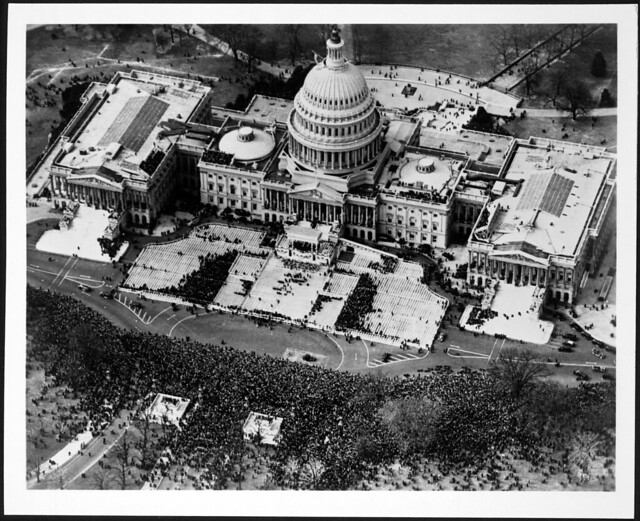
On March 4, 1933, at the height of the Great Depression, Franklin Delano Roosevelt is inaugurated as the 32nd president of the United States. In his famous inaugural address, delivered outside the east wing of the U.S. Capitol, Roosevelt outlined his "New Deal"--an expansion of the federal government as an instrument of employment opportunity and welfare--and told Americans that "the only thing we have to fear is fear itself." Although it was a rainy day in Washington, and gusts of rain blew over Roosevelt as he spoke, he delivered a speech that radiated optimism and competence, and a broad majority of Americans united behind their new president and his radical economic proposals to lead the nation out of the Great Depression.

Source: bet.com via Juan on Pinterest


Born into an upper-class family in Hyde Park, New York, in 1882, Roosevelt was the fifth cousin of Theodore Roosevelt, who served as the 26th U.S. president from 1901 to 1909. In 1905, Franklin Roosevelt, who was at the time a student at Columbia University Law School, married Anna Eleanor Roosevelt, the niece of Theodore Roosevelt. After three years as a lawyer, he decided to follow his cousin Theodore's lead and sought public office, winning election to the New York State Senate in 1910 as a Democrat. He soon won a reputation as a charismatic politician dedicated to social and economic reform.

Roosevelt supported the progressive New Jersey governor Woodrow Wilson in his bid for the Democratic presidential nomination, and after Wilson's election in 1912 Roosevelt was appointed assistant secretary of the U.S. Navy, a post that Theodore Roosevelt once held. In 1920, Roosevelt, who had proved himself a gifted administrator, won the Democratic nomination for vice president on a ticket with James Cox. The Democrats lost in a landslide to Republicans Warren Harding and Calvin Coolidge, and Roosevelt returned to his law practice and undertook several business ventures.


In 1921, he was stricken with poliomyelitis, the virus that causes the crippling disease of polio. He spent several years recovering from what was at first nearly total paralysis, and his wife, Eleanor, kept his name alive in Democratic circles. He never fully covered and was forced to use braces or a wheelchair to move around for the rest of his life.


In 1924, Roosevelt returned to politics when he nominated New York Governor Alfred E. Smith for the presidency with a rousing speech at the Democratic National Convention. In 1928, he again nominated Smith, and the outgoing New York governor urged Roosevelt to run for his gubernatorial seat. Roosevelt campaigned across the state by automobile and was elected even as the state voted for Republican Herbert Hoover in the presidential election.


As governor, Roosevelt worked for tax relief for farmers and in 1930 won a resounding electoral victory just as the economic recession brought on by the October 1929 stock market crash was turning into a major depression. During his second term, Governor Roosevelt mobilized the state government to play an active role in providing relief and spurring economic recovery. His aggressive approach to the economic crisis, coupled with his obvious political abilities, gave him the Democratic presidential nomination in 1932.


Roosevelt had no trouble defeating President Herbert Hoover, who many blamed for the Depression, and the governor carried all but six states. During the next four months, the economy continued to decline, and when Roosevelt took office on March 4, 1933, most banks were closed, farms were suffering, 13 million workers were unemployed, and industrial production stood at just over half its 1929 level.


Aided by a Democratic Congress, Roosevelt took prompt, decisive action, and most of his New Deal proposals, such as the Agricultural Adjustment Act, National Industrial Recovery Act, and creation of the Public Works Administration and Tennessee Valley Authority, were approved within his first 100 days in office. Although criticized by many in the business community, Roosevelt's progressive legislation improved America's economic climate, and in 1936 he easily won reelection.


During his second term, he became increasingly concerned with German and Japanese aggression and so began a long campaign to awaken America from its isolationist slumber. In 1940, with World War II raging in Europe and the Pacific, Roosevelt agreed to run for an unprecedented third term. Reelected by Americans who valued his strong leadership, he proved a highly effective commander in chief after the December 1941 U.S. entrance into the war. Under Roosevelt's guidance, America became, in his own words, the "great arsenal of democracy" and succeeded in shifting the balance of power in World War II firmly in the Allies' favor. In 1944, with the war not yet won, he was reelected to a fourth term.


Three months after his inauguration, while resting at his retreat at Warm Springs, Georgia, Roosevelt died of a massive cerebral hemorrhage at the age of 63. Following a solemn parade of his coffin through the streets of the nation's capital, his body was buried in a family plot in Hyde Park. Millions of Americans mourned the death of the man who led the United States through two of the greatest crises of the 20th century: the Great Depression and World War II. Roosevelt's unparalleled 13 years as president led to the passing of the 22nd Amendment to the U.S. Constitution, which limited future presidents to a maximum of two consecutive elected terms in office.


Taken from: http://www.history.com/this-day-in-history/fdr-inaugurated [04.03.2013]

This Day in History: Mar 4, 1939: The "“Ossewabrandwag" is founded in South Africa


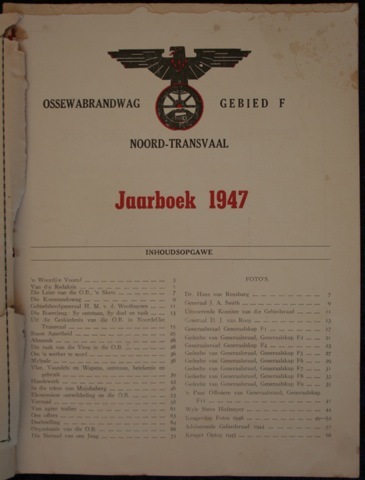
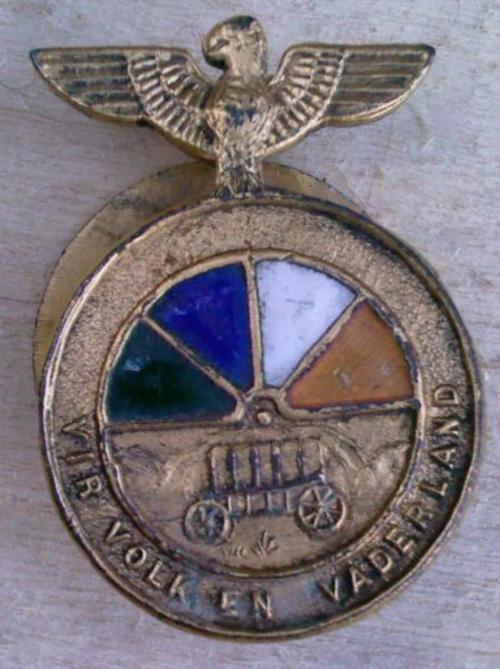
The Ossewabrandwag (OB) (English: Ox-wagon Sentinel) was an anti-British and pro-German organization in South Africa during World War II, which opposed South African participation in the war. It was formed in Bloemfontein on 4 February 1939 by Pro-Nazi Afrikaners.

Background
During the 19th century, most of the Boers of the northeastern Cape frontier migrated to the interior, and established the Orange Free State and South African Republic, which were independent of Britain. In the Second Boer War (1899–1902), Britain conquered the Boer Republics. The Netherlands and Germany supported the Boer cause.


Source: namibiana.de via Juan on Pinterest


After the war, there was a general reconciliation between Afrikaners and Britain, culminating in the formation of the Union of South Africa in 1910, under the leadership of former Boer fighters such as Louis Botha and Jan Smuts (who was of Cape Dutch origin fighting on the side of the Boers). South African troops, including thousands of Afrikaners, served in the British forces during World War I.


Nonetheless, many Boers remembered the extremely brutal tactics used by Britain in the Boer War and remained resentful of British rule, even loose association with Britain as a Dominion.


1930s
The chief vehicle of Afrikaner nationalism at this time was the "Purified National Party" of D. F. Malan, which broke away from the National Party when the latter merged with Smuts' South African Party in 1934. Another important element was the Afrikaner Broederbond, a quasi-secret society founded in 1918, and dedicated to the proposition that "the Afrikaner volk has been planted in this country by the Hand of God..."[1]


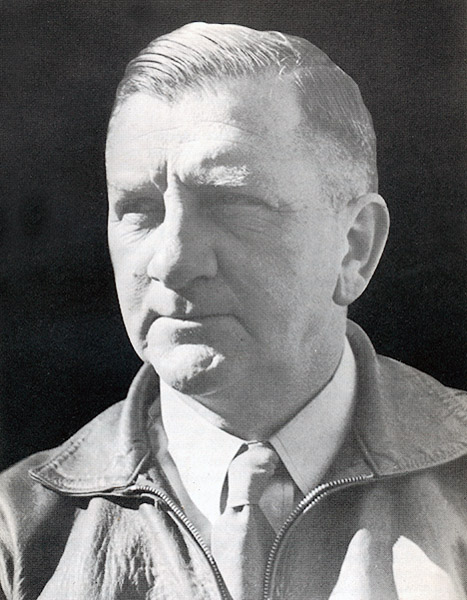
1938 was the centennial anniversary of the Great Trek (the migration of Boers to the interior). The Ossewabrandwag was established in commemoration of the Trek. Most of the migrants traveled in ox-drawn wagons, hence the group's name. The group's leader was Johannes Van Rensburg, a lawyer who had served as Secretary of Justice under Smuts (as Minister), and was an admirer of Nazi Germany.[2]

During World War II
The Boer militants of the Ossebrandwag (OB) were hostile to Britain and sympathetic to Nazi Germany, whose racial ideology parallelled their own. Thus the OB opposed South African participation in the war, even after the Union declared war in support of Britain in September 1939. While there were parallels, neither Van Rensburg nor the OB were genuine fascists, according to v. d. Berghe.[3]

Source: oocities.org via Juan on Pinterest

Alexandre Kum'a Ndumbe III however shows, that OB was "based on the Führer-principle, fighting against the Empire, the capitalists, the communists, the Jews, the party and the system of parliamentarism ... on the base of national-socialism", according to a German secret source dated Jan. 18, 1944[4]

Source: imageshack.us via Juan on Pinterest

Members of the OB refused to enlist in the South African forces, and sometimes harassed servicemen in uniform. This erupted into open rioting in Johannesburg on 1 February 1941; 140 soldiers were seriously hurt.[5]


More dangerous than this was the formation of the Stormjaers (English: Assault troops), a paramilitary wing of the OB similar to the Nazi Sturmabteilung. The nature of the Stormjaers was evidenced by the oath sworn by new recruits: "If I retreat, kill me. If I die, avenge me. If I advance, follow me" (Afrikaans: As ek omdraai, skiet my. As ek val, wreek my. As ek storm, volg my).[6]

Source: bidorbuy.co.za via Juan on Pinterest

The Stormjaers engaged in sabotage against the Union government. They dynamited electrical power lines and railroads, and cut telegraph and telephone lines.[5] These types of acts were going too far for most Afrikaners, and Malan ordered the National Party to break with the OB in 1942.[2]

Source: boyshigh.com via Juan on Pinterest

The Union government cracked down on the OB and the Stormjaers, placing thousands of them in internment camps for the duration of the war. Among the internees was future prime minister B. J. Vorster.


At the end of the war, the OB was absorbed into the National Party and ceased to exist as a separate body.

References
  1. ^ Schönteich, M; Boshoff, H (March 2003), "'Volk' Faith and Fatherland. The Security Threat Posed by the White Right", Institute of Security Studies. Monograph. No 81
  1. ^ a b "Ossewabrandwag" at About.com, Alistair Boddy-Evans
  1. ^ Van den Berghe, Pierre L. (1967). South Africa, a study in conflict. Berkeley: University of California Press. pp. 79–81. ISBN 0-520-01294-1.
  1. ^ Author of this message named "Felix", i. e. Lothar Sittig, a German agent, who was based inside the South African Union and had frequent contact with Dr J. F. Johannes Van Rensburg, the Ossewabrandwag leader. pp. 7f.. See Unesco, 1980 p. 17 "O. B. im Jahreswechsel", i.e. Ossewabrandwag in the turn of the year. Print in French: A. Kum'a N'Dumbe, Hitler voulait l'Afrique, l'Harmattan, Paris 1980 ISBN 978-2-85802-140-6 pp. 371f; in German: IKO Verlag, Frankfurt 1993. - From: Auswärtiges Amt (Foreign Office) Bonn, Archives StS Afrika (i.e.: Staatssekretär) 1939 - 1943, f. 24, 1102-S9
  1. ^ a b Bunting, Brian. The Rise Of The South African Reich, Chapter 6
  1. ^ Williams, Basil (1946). "10 - Smuts and the War in Africa". Botha Smuts And South Africa. Hodder And Stoughton Limited London. pp. 161 (n178).

Taken from: http://en.wikipedia.org/wiki/Ossewabrandwag [04.03.2013]

Friday, March 1, 2013

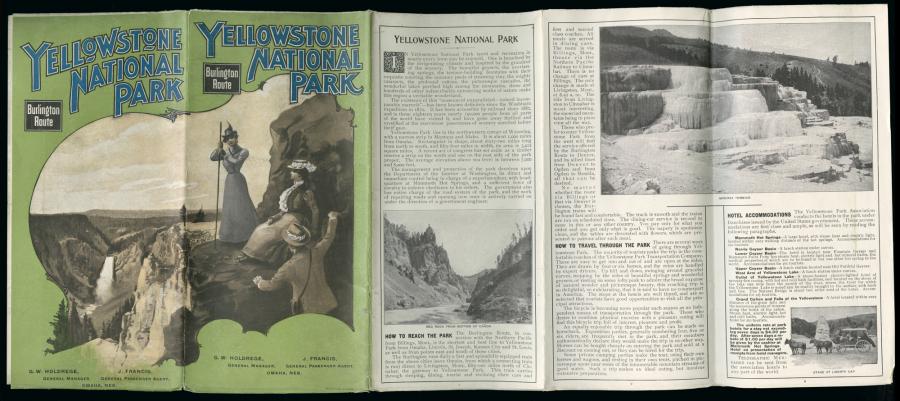
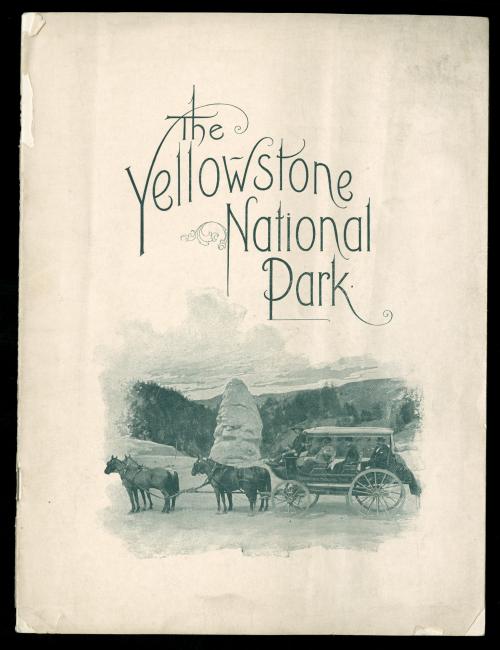
This Day in History: Mar 1, 1872: Yellowstone Park established


President Grant signs the bill creating the nation's first national park at Yellowstone.


Source: cr.nps.gov via Juan on Pinterest

Native Americans had lived and hunted in the region that would become Yellowstone for hundreds of years before the first Anglo explorers arrived. Abundant game and mountain streams teaming with fish attracted the Indians to the region, though the awe-inspiring geysers, canyons, and gurgling mud pots also fascinated them.


John Colter, the famous mountain man, was the first Anglo to travel through the area. After journeying with Lewis and Clark to the Pacific, Colter joined a party of fur trappers to explore the wilderness. In 1807, he explored part of the Yellowstone plateau and returned with fantastic stories of steaming geysers and bubbling cauldrons. Some doubters accused the mountain man of telling tall tales and jokingly dubbed the area "Colter's Hell."


Before the Civil War, only a handful of trappers and hunters ventured into the area, and it remained largely a mystery. In 1869, the Folsom-Cook expedition made the first formal exploration, followed a year later by a much more thorough reconnaissance by the Washburn-Langford-Doane expedition. The key to Yellowstone's future as a national park, though, was the 1871 exploration under the direction of the government geologist Ferdinand Hayden. Hayden brought along William Jackson, a pioneering photographer, and Thomas Moran, a brilliant landscape artist, to make a visual record of the expedition. Their images provided the first visual proof of Yellowstone's wonders and caught the attention of the U.S. Congress.


Early in 1872, Congress moved to set aside 1,221,773 acres of public land straddling the future states of Wyoming, Montana, and Idaho as America's first national park. President Grant signed the bill into law on this day in 1872. The Yellowstone Act of 1872 designated the region as a public "pleasuring-ground," which would be preserved "from injury or spoilation, of all timber, mineral deposits, natural curiosities, or wonders within."


For a nation bent on settling and exploiting the West, the creation of Yellowstone was surprising. Many congressmen gave it their support simply because they believed the rugged and isolated region was of little economic value. Yet the Yellowstone Act of 1872 set a precedent and popularized the idea of preserving sections of the public domain for use as public parks. Congress went on to designate dozens of other national parks, and the idea spread to other nations around the world.


Source: nps.gov via Juan on Pinterest


Taken from: http://www.history.com/this-day-in-history/yellowstone-park-established [01.03.2013]