
The Wonderland murders, also known as the Four on the Floor Murders or the Laurel Canyon Murders, are four unsolved killings that occurred in Los Angeles on July 1, 1981. Of the six targeted to be killed in the known drug house on Wonderland Avenue, five were present; four of the five died from extensive injuries: Joy Miller, Billy DeVerell, Ron Launius, and Barbara Richardson. Launius' wife, Susan Launius, survived the attack. The attack was allegedly masterminded by organized crime figure and nightclub owner Eddie Nash. Porn star John Holmes was arrested, tried, and acquitted for his involvement in the murders.


Robbery and murders
The Wonderland Gang was centered around the occupants of a rented townhouse at 8763 Wonderland Avenue in the Laurel Canyon section of Los Angeles: Joy Audrey Gold Miller (whose name was on the lease[citation needed]), her live-in boyfriend William Raymond "Billy" DeVerell, David Lind, and the gang's leader, Ronnie Lee "Ron" Launius. All four were involved in drug use and drug dealing.
On June 28, 1981, the group met with friends Tracy McCourt and John Holmes, a porn star and known drug addict. They had decided to rob the home of Eddie Nash, neé Adel Gharib Nasrallah, wealthy owner of several Los Angeles-area night clubs and drug dealer. Holmes, whom Nash had befriended, visited the house, ostensibly to buy drugs. While at Nash's home, Holmes unlocked a back door for the gang to enter later. Holmes then went back to Wonderland in order to report back to Launius and the others.
![[WADD DOCUMENTARY DVD] WADD THE LIFE AND TIMES OF JOHN HOLMES THE PORN KING + WONDERLAND MURDERS DVDS](https://lh3.googleusercontent.com/blogger_img_proxy/AEn0k_vl4MtpODqlBw4s76j2xImuzhOgho4-5itGuI1v7EOsw-y5Sjs-v89IP1IEgt28Z-VJetduh-U7xk79iIASeyBhXxzJrB0L7pxfCe1vrpiF9WuzilPT3KQz=s0-d)
The next morning, June 29, DeVerell, Launius, Lind, and McCourt went to Nash's house. While McCourt stayed with the car, a stolen Ford Granada, the other three entered through the unlocked door. Invading the home, the trio handcuffed Nash and his live-in bodyguard, Gregory Diles. During the course of the subsequent robbery, the group took money, drugs, jewelry, threatened to kill Nash and Diles, and accidentally grazed Diles with a bullet. They then went back to the Wonderland Avenue townhouse to split up the money.

Nash suspected Holmes had been involved and ordered Diles to bring Holmes to his house. Diles found Holmes on a street in Hollywood wearing one of the rings that had been stolen from Nash and brought him back to Nash. Nash directed Diles to beat Holmes and Nash threatened to kill both Holmes and his family until Holmes identified the people behind the robbery. The beating was witnessed by Scott Thorson, former boyfriend of Liberace, who was buying drugs at Nash's home.[1]

In the early morning of July 1, 1981, two days after the robbery, an unknown number of assailants entered the Wonderland Avenue house. DeVerell and Launius were present, along with Launius' wife Susan, DeVerell's girlfriend Joy Miller, and Lind's girlfriend, Barbara Richardson. Each occupant present was bludgeoned repeatedly with what was later determined by the medical examiner and detectives to be a striated steel pipe. Susan Launius was the only one in the home who survived, albeit with serious injuries. A left palm print belonging to John Holmes found on the bed railing above the head of Ron Launius gave homicide detectives reason to believe John Holmes was present at the site of the murder. Holmes denied participation in the killings or being there when the murders happened. Later, however, he admitted to Sharon Holmes and Dawn Schiller that he was forced to watch the killings, but denied participating in them.[citation needed]

According to court testimony, David Lind survived because he was not at the house at the time of the murders, having spent the night at a San Fernando Valley motel with a prostitute and consuming drugs there. Shortly after the news media reported the murders, Lind contacted the police and informed on Nash and Holmes, thus giving them a start to their investigation.[citation needed]

Members of the gang included:
- Ronnie ("Ron") Lee Launius (b. May 18, 1944 d. July 1, 1981) (Leader)[citation needed]
- William Ray ("Billy") DeVerell (b. February 14, 1937 d. July 1, 1981)[citation needed]
- Joy Audrey Gold Miller (b. May 14, 1935 d. July 1, 1981) (DeVerell's girlfriend)[citation needed]
- David Clay Lind (b. October 24, 1938, d. November 16, 1995)[citation needed]
- Tracy Ray McCourt (b. February 20, 1949, d. October 18, 2006)[citation needed]
- Susan A. Launius (b. 1951; survived attack) (Ron Launius's wife)[citation needed]
- Barbara Lee Richardson (b. October 17, 1958; d. July 1, 1981[2]) (David Lind's girlfriend)


Police action and trials
Los Angeles Police Department detectives Tom Lange and Robert Souza led the murder investigation and searched Nash's home a few days after the crime. There they found more than $1 million worth of cocaine, as well as some items stolen from the Wonderland house. Following arrest and conviction for the cocaine charges, Nash spent two years in prison.[citation needed]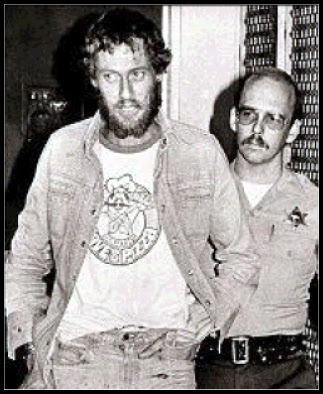
Because of the palm print found at the scene, Holmes was arrested and charged with four counts of murder in March 1982. The prosecutor, Los Angeles District Attorney Ron Coen, attempted to prove Holmes was a willing participant who betrayed the Wonderland Gang after not getting a full share of the loot from the robbery of Nash's house. Holmes' court-appointed defense lawyers, Earl Hanson and Mitchell Egers, successfully presented Holmes as one of the victims, having been forced by the real killers to give them entry to the house where the murders took place. Holmes was acquitted of all criminal charges on June 26, 1982.

For refusing to testify or cooperate with authorities, he spent 110 days in jail for contempt of court.[2]
Holmes died six years later on March 13, 1988, as a result of AIDS complications, at a VA Medical Center in Los Angeles.[citation needed] Shortly after the murders, in her first newspaper interview in July 1981, Holmes' first wife, Sharon Gebenini-Holmes, stated that Holmes had told her he'd known the people in the Wonderland house and that he had been there shortly before the murders occurred. She did not divulge any additional information to police. During an interview several years following his death, Sharon stated that Holmes had come to her house the morning after the killings, with blood splattered all over his clothes. Holmes was personally uninjured, and he did not give her any details to explain the condition of his clothing.


One month before Holmes died, two police detectives visited him at the VA hospital to question him about what he knew about the murders. Nothing came out of the visit because Holmes was barely awake and his responses to their questions were incoherent. Yet on his deathbed, Holmes refused to answer the detectives's inquiries about whether he took part in the murders or divulge anything else about his involvement.[citation needed]


In 1990, Nash was charged in California state court with having planned the murders, and Diles was charged with participating in the murders. Thorson testified against them, but the trial ended with a hung jury vote of 11–1 for conviction.[citation needed] The second trial in 1991 ended in acquittal.[citation needed] Diles died in 1995.[citation needed]

In 2000, after a four-year joint investigation involving local and federal authorities, Nash was arrested and indicted on federal charges under the Racketeer Influenced and Corrupt Organizations Act (RICO) for running a drug trafficking and money laundering operation, conspiring to carry out the Wonderland Murders, and bribing the sole holdout juror of his first trial. Nash, already in his seventies and suffering from emphysema and several other ailments, agreed to a plea bargain agreement in September 2001. He admitted to having bribed the lone holdout in his first trial, a young woman, with $50,000, and pled guilty to the RICO charges and to money laundering. He admitted to having ordered his associates to retrieve stolen property from the Wonderland house, which might have resulted in violence including murder, yet he denied having planned the Wonderland murders. In the end, Nash received a four-and-a-half-year prison sentence and a $250,000 fine.[3][4][5]

Where are they now?
As of January 2007, the sole survivor of the robbery at Eddie Nash's mansion is Nash himself. Susan Launius is the only remaining survivor of the infamous Wonderland Gang.

- Ron Launius, Billy DeVerell, Joy Miller, and Barbara Richardson all died in the 1981 massacre.[30]
- Launius is buried at Lodi Memorial Park and Cemetery in Lodi, CA[31]
- DeVerell is buried at Forest Lawn Memorial Park (Covina Hills) in Covina, CA[32]
- Miller is buried at Mount Sinai Memorial Park in Los Angeles, CA[33]
- Richardson is buried at Saint Marys Catholic Cemetery and Mausoleum in Sacramento, CA, under her father's last name (Easton).[34]
- Susan Launius survived the attack[35] and lives in southern California.[citation needed]
- David Clay Lind (b. October 24, 1940[36]) died of a heroin overdose[citation needed] on November 16, 1995 in Sonoma County, CA. He is buried at Santa Rosa Memorial Park in Santa Rosa, CA.[37]
- Tracy Raymond McCourt died of unspecified causes on October 18, 2006. He is buried at Congregation Emanuel Cemetery in Denver, CO[38][39]


Others allegedly involved in the Nash robbery or Wonderland attacks:
- Gregory Dewitt Diles also died in 1995, from liver failure.[citation needed]
- Samuel Lawton Diles, Gregory's brother, died in 2002 of unspecified causes.[citation needed]
- John Curtis Holmes died in 13 March 1988 from medical complications due to AIDS.[40]

The other assailants who participated in the bludgeoning attack on the Wonderland Gang have neither been identified nor prosecuted; their fate and whereabouts are unknown.[citation needed]

taken from: http://en.wikipedia.org/wiki/Wonderland_Murders {01.07.2013]


